
People tend to hate what they don’t understand.
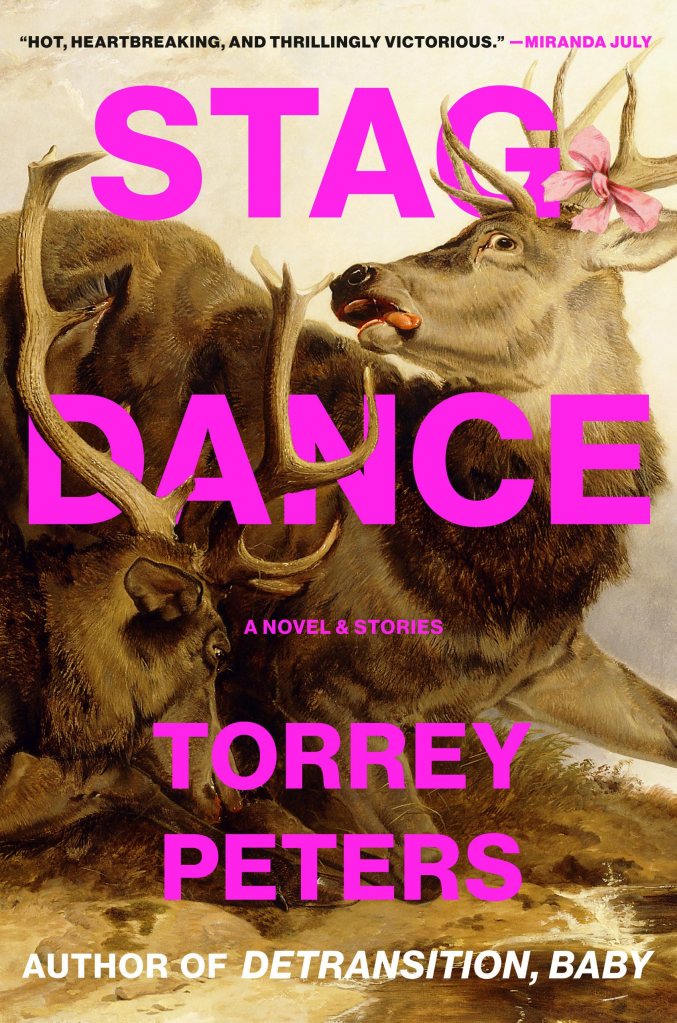
When it comes to such fiercely disputed topics as sexuality and identity, Torrey Peters doesn’t hesitate to dive headfirst into the fray. As proven by her new book, Stag Dance, Peters isn’t afraid to challenge stereotypes. Being a trans woman herself, she understands better than anyone how it feels to be placed within a box chockfull of expectations. By placing her narratives in settings where it isn’t typical to encounter gender-divergent individuals, she contributes to the normalization of our very reality: Queerness is everywhere and undeniably present in society. At the same time, by illustrating characters with a real knack for realism, Peters works towards proving that transgender people are not the hot commodity they’re made out to be; they’re human beings. Peters’ ability to convey the utter rawness of this humanity is a testament to the intensity of her own experience; it’s possible that such a book couldn’t be written by anyone without that experience.
“We have to understand each other well,” Peters writes, “to be so cruel.” It’s quotes like this one, plucked from an assortment of similarly challenging interactions between her characters, that display the search for meaning in the otherwise lackluster lives they believe themselves to lead. Though the time periods vary across the book’s four stories (the titular piece is novella-length), all of them connect to the central subject of identity exploration. The first story opens with an apocalypse with a gendered twist: Sex hormones are no longer naturally produced, and everyone must fight amongst themselves to maintain their secondary sex characteristics. The second story shifts away from such postmodern chaos to the comparatively coherent world of a Quaker boarding school, detailing a forbidden relationship between two of the “boys” dorming with one another. The titular piece is narrated by a Paul Bunyan-esque lumberjack, as their ringleader seeks to spice up life in the logging industry with an unconventional “stag dance” – an event where some of the men playact as women and seek to be courted by their colleagues. Well, they appear to be acting, until it’s revealed that the event is actually a coverup for most of the participants. Peters rounds out the collection with an otherwise vulgar tale of a crossdressing fetishist and a young woman early in her societal transition. Its crude language and particular turn of events wrap up the book’s assortment in a memorable way, but the story also produces a sinking feeling in the reader’s gut.
With beautiful diction and meaningful themes spanning every page, Torrey expertly intertwines illegal logging with a Las Vegas convention, seamlessly splicing the two through the common search for something more. She writes in bold strokes, and her style is effective all throughout this quartet. That said, she loses the reader’s attention right about the time they reach the titular piece, “Stag Dance,” as the lumberjack lingo tends to throw off reading-flow in its entirety. The narrator’s hyperspecific diction takes a sharp right turn from the otherwise contemporary language, interrupting engagement and halting the immediate comprehension which, mere pages earlier, came naturally with everyday language. Though complex in concept and tied up beautifully in the end, the story drags its feet and simply does not need to be the longest work of the four. If descriptions of animal violence and uncomfortable conversations about relationship complications aren’t enticing, then a lot of the collection’s nuance will be lost. As a whole, the short stories – “Infect Your Friends and Loved Ones,” “The Chaser,” and “The Masker” – are all easy reads: the words practically fly off the pages, making them perfect candidates to be elaborated beyond simple vignettes. It’s a shame that most of the page-coverage is dedicated to a story approaching circular narration; it’s arguable that the narrative requires this space to be as effective as it is in its conclusion, but it’s also plausible to construe this powerful meaning within a similar duration, as witnessed in the other three pieces.
Overall, however, every piece of this collection’s pie collides with expertly accomplished cohesion. Inspiring and intense, Peters compels her readers to think beyond the characters – beyond themselves – challenging empathy and evoking change. By professionally conveying her ultimate belief in the power of self-discovery and exploration, Peters is able to portray the unrefined messiness in identity exploration – the same messiness that leads to the beautiful metamorphosis that is a blossoming belief in self-worth.
Milo Spain is an incoming college freshman based in Southern California.
 Orange County Review of Books